



Debra Nazarian –
The most important skill in my field isn’t technical
What decades of laser hair removal and electrolysis have taught me about listening, expertise, and knowing when to look deeper
I’ve spent decades mastering laser hair removal and electrolysis. I know the equipment inside and out. I know how to adapt technique to skin type, hair type, and treatment area. I know how to get results.
But none of that was ever the hardest part of this work.
The hardest part — and the most important part — is understanding that clients don’t just come to me to have hair removed. They come for relief. For answers. For confidence. And often, without even realizing it, they come for someone to finally help them understand what’s happening to their own body.
Every client carries something
Almost everyone who sits in my chair carries something with them: self-consciousness, embarrassment, shame, years of feeling like they had to hide a part of themselves. That’s true whether someone is dealing with a few stray hairs or a pattern of growth that’s followed them for years.
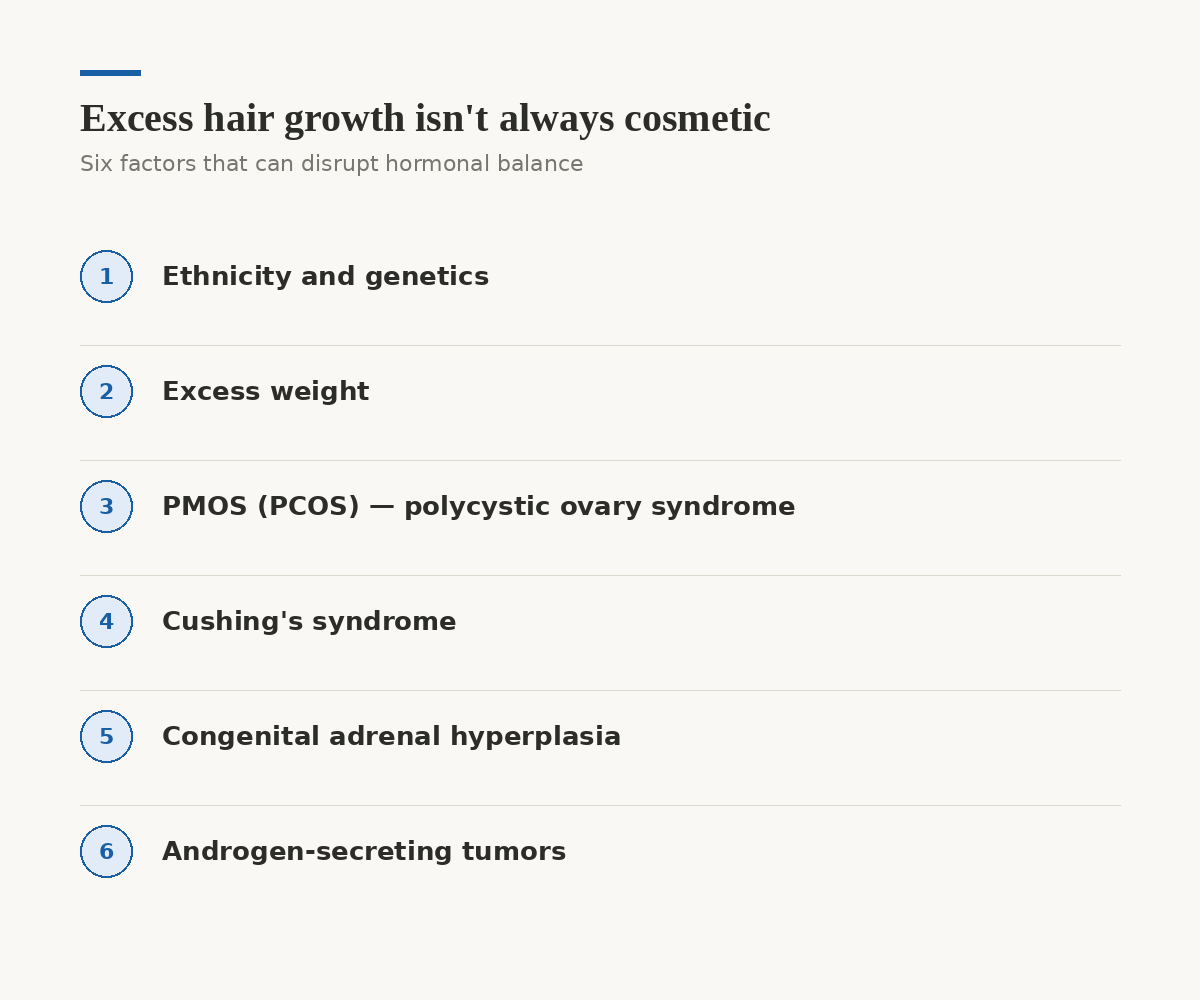
What most people don’t realize is that excess hair growth isn’t always just cosmetic. In many cases, it’s connected to real medical and biological factors, including:
- Ethnicity and genetics — hair growth patterns vary significantly and naturally across different backgrounds
- Excess weight — which can affect hormone regulation
- PMOS (PCOS) — polycystic ovary syndrome, one of the most common hormonal causes of excess hair growth
- Cushing’s syndrome — a condition caused by prolonged exposure to high cortisol levels
- Congenital adrenal hyperplasia — a group of inherited disorders affecting the adrenal glands
- Androgen-secreting tumors — rare, but a possible cause of sudden or severe changes in hair growth
These conditions disrupt the body’s natural hormonal balance and raise androgen (male hormone) levels. That disruption is often why someone is dealing with a hair growth pattern that feels confusing, frustrating, or upsetting — and why it can feel like nobody has ever fully explained what’s actually happening to their body.
Why the right practitioner matters
This is exactly why choosing the right practitioner matters so much. Real expertise in this field isn’t just technical skill with the equipment and application. It’s knowing when what’s in front of you is more than cosmetic, and having the depth of knowledge to recognize it.
A truly experienced practitioner isn’t just removing hair. They’re a guide — someone who can help a client understand what might really be going on beneath the surface, and who can gently encourage them to get the care they deserve.
That’s a responsibility I’ve carried with every client throughout my career. Being able to say, with real compassion, “this might be worth mentioning to your doctor” — in a way that feels supportive rather than alarming — is one of the deepest parts of this work.
If you notice sudden or unusual hair growth, it’s always worth a conversation with your doctor. It doesn’t hurt to rule things out. And if a physician doesn’t take your concerns seriously or isn’t willing to move forward with testing, don’t stop there. Find someone who will.
More than a service
Clients aren’t just booking a service. Many of them are navigating something medical, something emotional, or both — often at the same time. What they need isn’t just a skilled practitioner. It’s someone who listens without judgment, who understands the whole picture, and who treats every step of the process with real care.
If you’ve ever felt rushed through an appointment or unheard by a provider, you deserve better than that. It’s out there.
As business owners in this field, we have a responsibility to do whatever we can to help our clients reach their goals — always in a way that’s compassionate, respectful, and genuinely helpful. After all, they are putting their trust in us.